

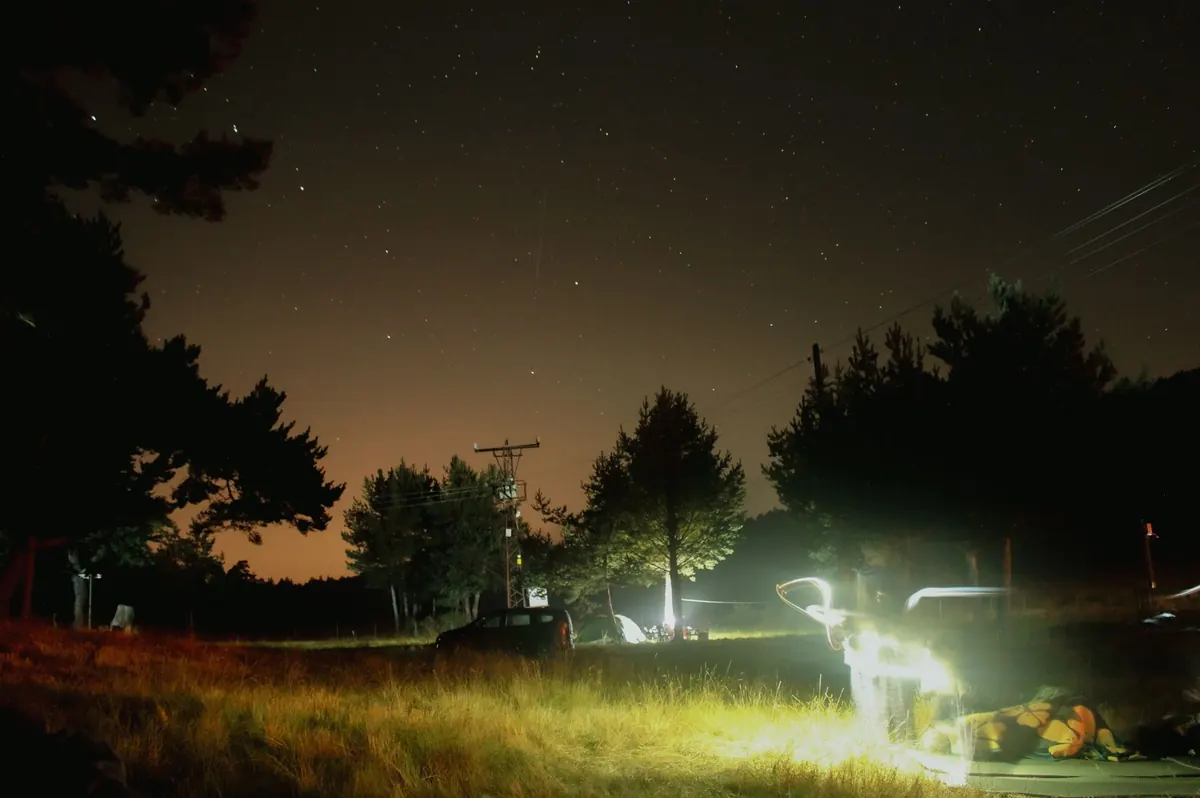
Pitch your tent on a mild August evening in the Peak District and you might not reach for a lantern until ten o'clock. Pitch it in late September in north Wales, with rain on the flysheet and the light fading by half seven, and a decent lantern stops being a luxury. It becomes the thing that lets you cook, read, find your socks and avoid tripping over guy lines. Choosing your first one is mostly about matching a few practical details to the way you actually camp.
Brightness: start with lumens, then think about the beam
Lantern brightness is measured in lumens. Watts are not a reliable guide, because different LEDs and diffusers produce very different amounts of usable light. The number that matters is not just the maximum, but the lowest setting and how the light is spread.
A focused beam throws light across a pitch but creates harsh shadows. A diffused, globe-like lantern fills a tent more evenly, which is usually what you want for eating, reading and getting changed. Look for a lantern that dims smoothly rather than one that jumps between blinding and useless.
- 50–150 lumens: enough for a one- or two-person tent, reading in a sleeping bag, or late-night admin.
- 150–400 lumens: a good range for a family tent, a cooking area, or a game of cards at a picnic table.
- 400 lumens and above: useful for a large awning, a group shelter, or lighting a whole pitch. Often more than a small tent needs.
If you camp with others, a warm, soft light is kinder on everyone's eyes than a cold, intense one. You can always turn a bright lantern down; you cannot turn a weak one up.
Battery type: decide how you will keep it alive
This is the decision that causes the most regret. A lantern is only useful if it has power when you need it, and the right choice depends on whether you have electric hook-up, a power bank, or neither.
- Built-in rechargeable battery: convenient and tidy. Charge it by USB-C before you leave. Once it is flat, you cannot swap in a fresh set unless you have a power bank. Check the charging port is covered properly.
- Replaceable AAs or AAAs: easy to find in a campsite shop or petrol station. Good for emergencies. They create waste, and cheap alkalines can leak if left in the lantern for months. Rechargeable NiMH AAs are a better long-term option if you remember to charge them.
- Replaceable lithium-ion cells: common in brighter lanterns. They hold charge well and can be swapped. You need to understand the cell type and carry spares safely, ideally in a plastic case.
For a weekend trip, either a charged built-in battery or a spare set of batteries will do. For a longer trip, take a power bank or a charger that works from your car or a hook-up. Cold weather reduces battery performance, so keep spares in an inside pocket rather than a cold tent pocket.
Weather resistance: British campsites are damp
You do not need a diving light, but you do need something that survives drizzle, condensation and an accidental knock into wet grass. Look for an IP rating. IPX4 means it can handle splashes from any direction. IPX7 means it can survive being submerged briefly. For most UK camping, IPX4 or better is sensible.
Pay attention to port covers and seams. A rubber flap over a USB socket is only useful if it seals properly. If the lantern has a battery compartment, check the gasket. In a tent, condensation can be as much of a problem as rain, especially on a still night. Hang the lantern from a loop rather than leaving it on the ground, and avoid storing it damp.
Weather resistance is not the same as waterproof. A lantern rated IPX4 will cope with a shower and a damp tent; it will not enjoy sitting in a puddle overnight.
Pack size, weight and hanging options
For car camping, pack size is less critical, but a lantern that rolls around or falls over is annoying. A flat base and a stable shape matter more than a few grams. For backpacking, every gram counts, and a collapsible lantern that packs down to the size of a small apple is far more appealing than a rigid globe.
Check how you will hang it. Tent loops, tarp ridgelines, caravan awning rails and tree branches all need different fittings. A simple carabiner or a folding hook covers most situations. Some lanterns have magnets, which are useful on a car boot or a metal table, but less helpful in a tent. If you plan to hang it above a table, make sure the hook fits over the loop and the lantern does not dangle into your dinner.
Light quality and controls
Colour temperature affects how a lantern feels. Warm white is easier on the eyes at night and makes a tent feel cosy. Cool white can look brighter and more clinical, which is useful for cooking or finding gear, but harsh when you are trying to wind down.
A red night mode is genuinely useful. Red light preserves your night vision, so you can check on a child or find a torch without waking everyone. Look for a lantern that remembers its last setting, so you do not have to cycle through strobe modes every time you turn it on.
Controls matter more than they seem. One button that cycles through five modes is fiddly with cold hands. Separate power and mode buttons, or a dial, are easier. Strobe is rarely useful for camping and easy to trigger by accident. If you can, handle the lantern before buying and press the buttons. Imagine doing it in the dark, wearing gloves.
Match the lantern to the trip you actually take
Car camping and family tents
Prioritise brightness, stability and runtime. A larger rechargeable lantern with a warm diffuser and a sturdy hook works well. Two smaller lanterns can be better than one big one: one for
Photo: esralogy e / Pexels